About
I read a lot of news, and I was tired of doom-scrolling past the same three kinds of noise: stories I did not care about, the same story repeated across a dozen outlets, and the things I actively did not want to see. I wanted a reader that did the judging for me, on a model I owned, and kept every byte on my own network.
So I gave myself three constraints: learn what I read without any hand-tuning, keep everything local, and stay honest about what it is.
That last one did the most work. There is no login and no multi-user mode: Cruxwire is built for a single trusted person on a private network, so it ships with no authentication by design and lives on your LAN or a tailnet, never the open internet. No accounts, no telemetry, no third-party calls beyond the feeds you choose and your own Ollama. The search is a filter, not a chatbot. Saying no to all of that is what kept it small enough to actually finish, and small enough to trust.
It has been my morning read for two months now, across 59 feeds: I clear what I have read, save a few things for later, and each run quietly tilts toward what I actually engage with, with no feed-tending and no ranking I cannot see.
Shipping to the homelab first is a deliberate choice, not a limitation. Running a capable model over your whole feed takes more compute than most everyday machines have today, so for now it is for people with a GPU box or a Mac with memory to spare, which is also where it earns its keep for me. I would rather ship early and let real use show me where to take it next, instead of guessing at a roadmap up front. The habit is already set: ship, then fix what real reading exposes, rather than polish in private. I am releasing it to learn, and to find out what it should become as the hardware catches up.
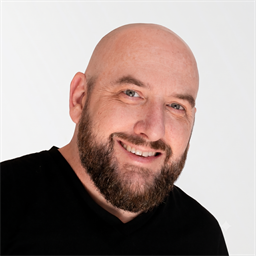
I'm a product leader, mostly in AI platforms and developer tooling. I write about projects like this at philoking.com.
 Cruxwire